
The British Needle Company was founded at the end of 1918 by Mr Frank Hawker, MBE, of Handsworth Birmingham, who had previously established the Carpathian Silver Company in Birmingham in 1886 – a firm which gained the reputation of being the world’s largest makers of Electro-plated trays.
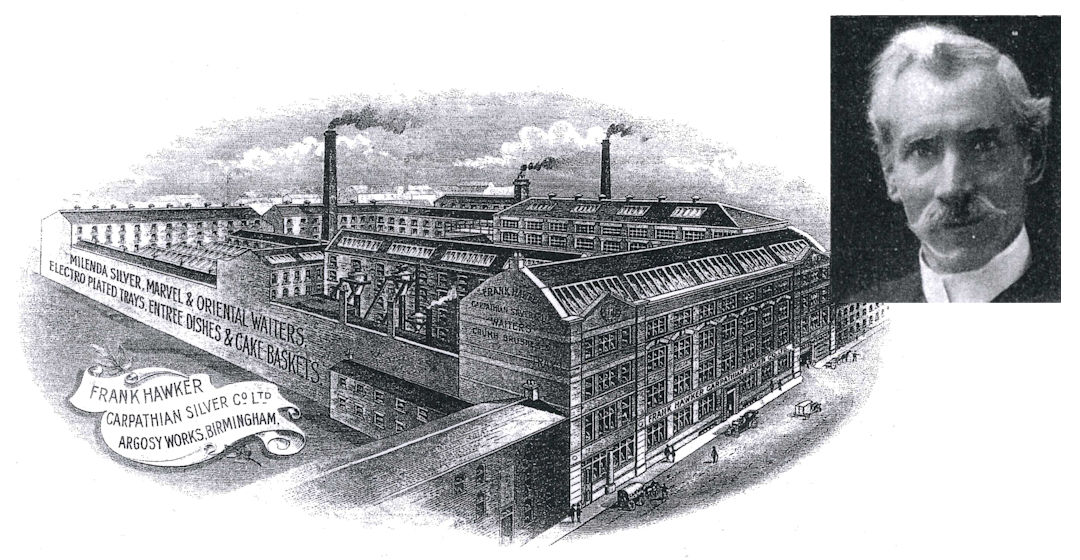
An image of the Carpathian Silver Company in Birmingham, and of its founder Mr Frank Hawker, MBE.
The Birmingham factory was called the Argosy works (Argosy means wealthy merchant ship). Frank continued to use the Argosy name as a brand name and logo for his newly formed British Needle Company.
Frank then set up his new factory – naturally called the Argosy Works – in Victoria Street, Redditch. The site he chose had once been owned by Henry Lewis needle and fishhook makers.
In 1919 Mr Edward Keesey joined the company after demobilisation from the Royal Naval Air Service, starting as a company secretary but quickly working his way up ‘the corporate ladder’. It is quite easy to see why, as he had great organizational skills, was very forward thinking and, speaking to people that remembered him, they also said he was a very fair-minded person, very disciplined and commanded a lot of respect. He was affectionally known as ‘Captain Keesey’.
It is really thanks to him that we have such a fantastic company archive as he documented and photographed the company throughout his time there. By 1921 he had become a general manger and by 1934 he was a company director. He steered the British Needle Company through various treacherous economic downturns as well as World War 2 and by 1944 the company was one of the largest manufacturers of needles in Britain.
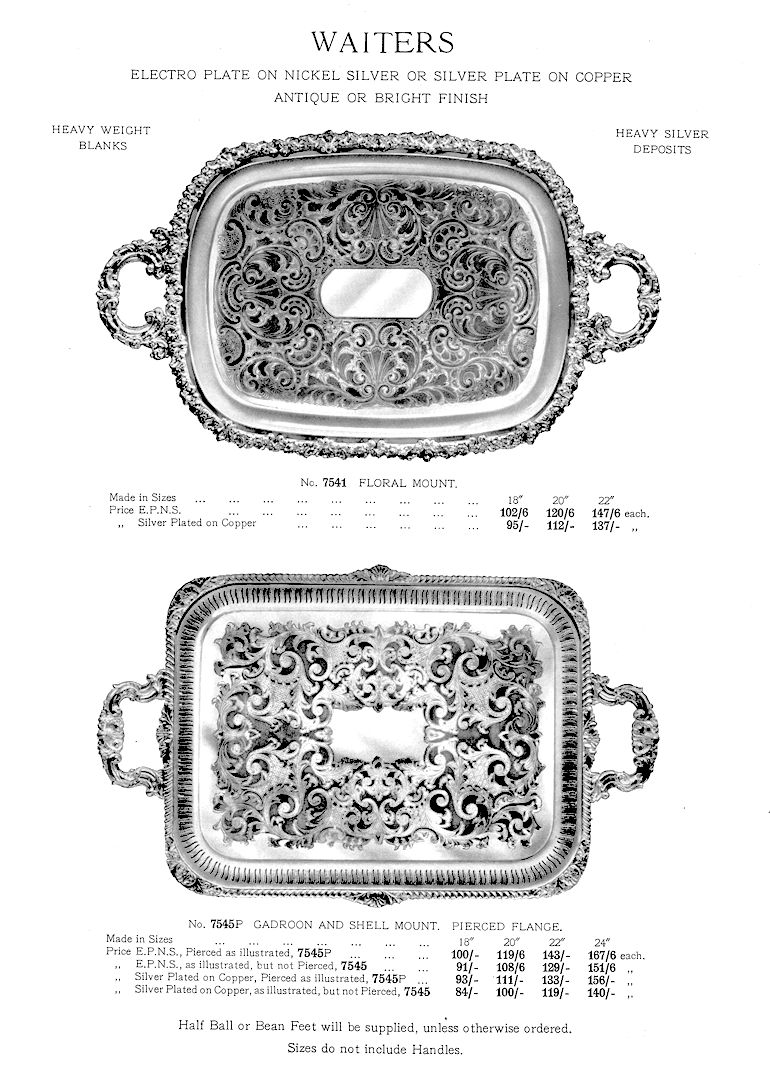
Electro-plated trays from the Carpathian Silver Company
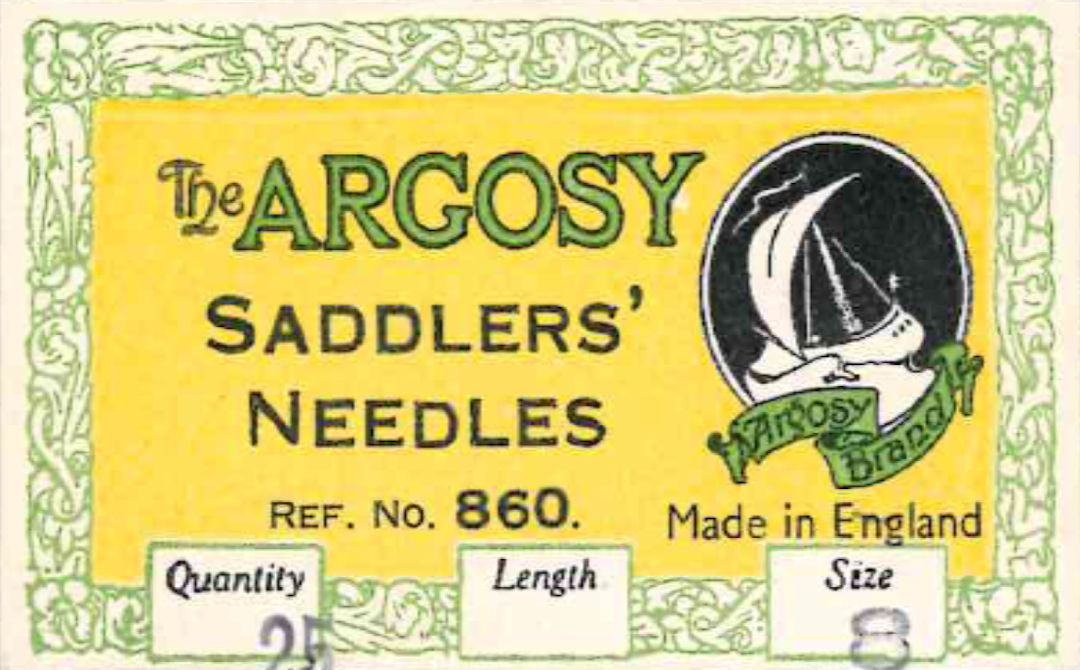
A needle packet showing the Argosy brand name
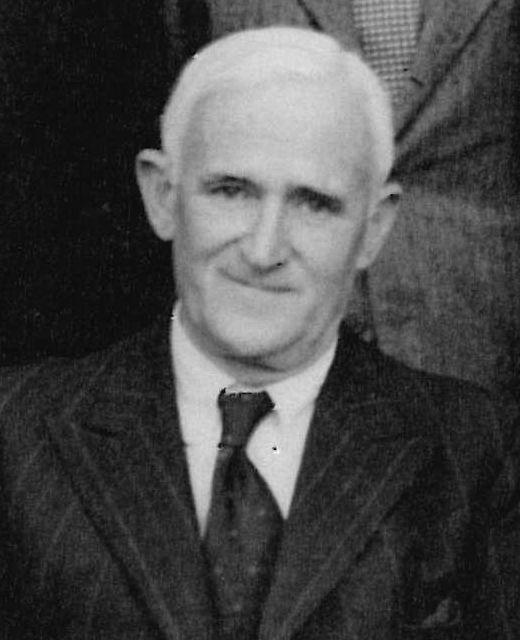
Mr Edward Keesey, Company Secretary, General Manager and Director
Looking at the advertising materials from this company we can see how innovative they were, and how they placed a great emphasis on the artistic presentation of their goods. They were very careful to catch the trends of the time for marketing purposes (like the fashion for all things Egyptian in the late 1920s – see under Marketing Materials) and they also prided themselves on making sure that none of their products ever looked ‘dated.’
This is remarkable when you look at the early photographs which show the almost ‘Dickensian’ working conditions, which in all fairness would have been very typical of most of the needle factories at the time. However, what makes these photographs special is the care that was taken to name people and to show the jobs they did.
Undoubtably, the greatest moment in the company’s history was when Princess Margaret visited Redditch and was shown around the factory in 1962 – how proud Edward Keesey must have been!
Sadly, he died in in 1963 and by 1972 the business was sold to another of the great names in Redditch needle making – Abel Morrall – where the story continued for a while.
In Memory
The Will of Frank Hawker
Frank Hawker died in 1937. He had had an interesting life, not only was he a leading Birmingham manufacturer (the Carpathian Silver Company) he was also a member of Birmingham City Council (for 10 years). In 1928 he was appointed as Honorary Consul for Turkey in Birmingham ‘to protect the rights and interests of the Turkish citizens to be found in his consular district’.
His will showed his generosity to family, friends, employees and charity (the Birmingham Children’s Hospital).
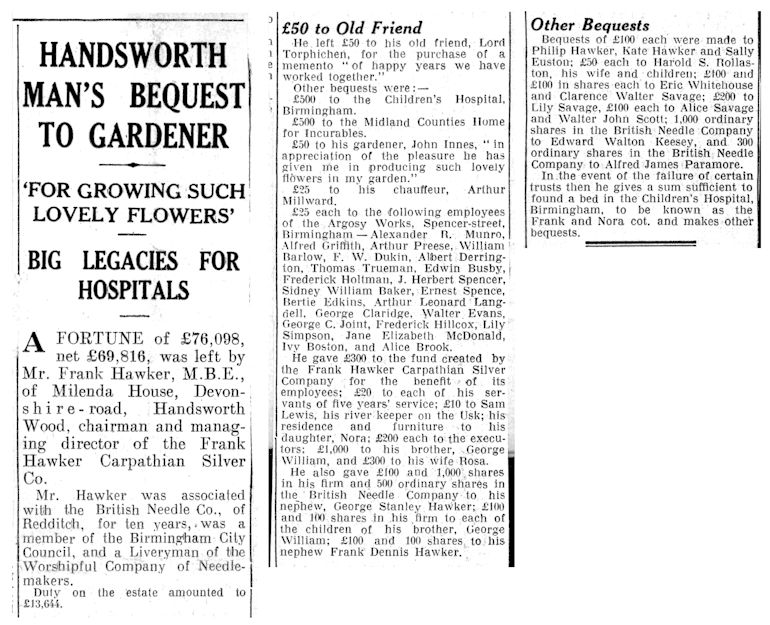
A newspaper article on the will of Frank Hawker, MBE, founder of the British Needle Company.
An Obituary of Edward Keesey
Edward Keesey sadly died only a year after retirement at the age of 67.
He and his wife had been planning to join his daughter in Australia. His hobbies were listed as sailing at the Barnt Green Sailing club and cinematography – which might explain his early interest in photography and the desire to record as much as he could of the working life of the British Needle Company.
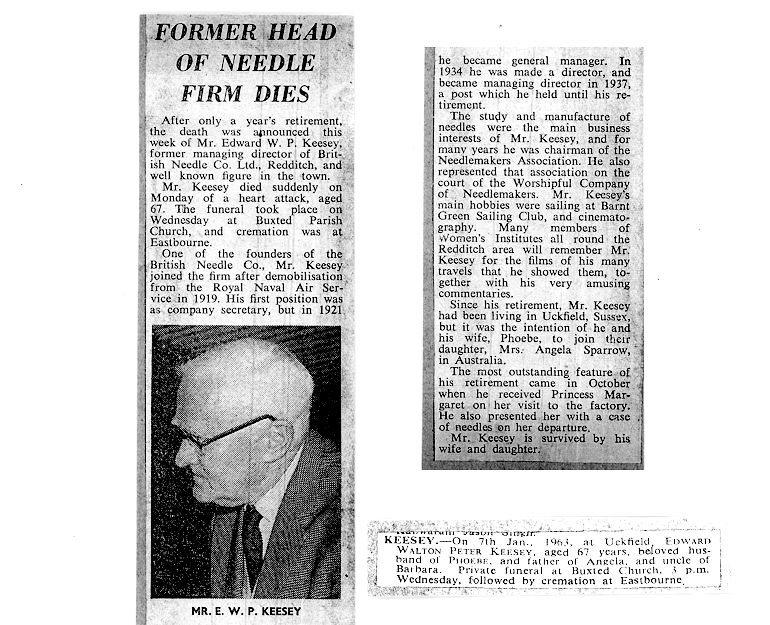
A newspaper obituary on the death of Edward Keesey, General Manager and Director of the company.